What is urgent and emergency care?

This explainer provides an overview of the structured approach to urgent and emergency care in Wales, which is a vital part of the NHS Wales system. A key challenge for the NHS in Wales is to ensure critical resources, like Emergency Departments, are reserved for true emergencies, while patients with less severe but still pressing issues receive timely advice and treatment through services like NHS 111 Wales, their GP, community pharmacies and minor injury units. Crucially, the Six Goals for Urgent and Emergency Care National Programme looks to shift the focus towards integrated, community-based care to improve outcomes and experience for all citizens.
What is emergency care in Wales?
Emergency care is a vital part of the NHS Wales system, designed to provide immediate medical attention for people with serious or life-threatening illnesses and injuries.
The services for emergency care in Wales are structured to ensure that immediate, life-threatening conditions such as signs of a heart attack or stroke, severe breathing difficulty or severe injury receive the fastest possible treatment.
What is urgent care in Wales?
Urgent care is designed to handle health issues that require prompt attention to prevent significant harm or deterioration but are not immediately life-threatening emergencies. The core objective of urgent care is to ensure that patients with less severe but still pressing needs can receive timely advice, diagnosis and treatment without having to attend an ED, thus keeping those critical services free for true emergencies.
Minor injury units can treat adults and children over 12-months of age, with minor injuries such as the following:
- Minor injuries in adults
- Minor injuries in children
- Human/ animal bites
- Minor burns
- Minor head injuries/ scalp laceration
- Ear/ nose foreign bodies
- Limb injuries
- Minor eye injuries
- Insect stings.
How does the NHS 999 service work?
The steps below explain what happens when someone calls 999 and requests an ambulance.
How are emergency ambulance services prioritised in Wales?
The WAST has implemented a major change to how it manages 999 calls, shifting its performance focus from simple response times to ensuring the patient receives the right care tailored to their needs and focused on outcomes and not just the speed of response.
From December 2025, the previous Amber and Green categories were replaced by a new system of three new categories: Orange Now, Yellow Soon, and Green Planned. These combined with the existing, most critical categories - Purple Arrest and Red Emergency (introduced in July 2025) - creating a five-tier system for prioritising calls:
- Purple Arrest – for patients in cardiac or respiratory arrest who need an ambulance immediately.
- Red Emergency – for patients at high risk of cardiac or respiratory arrest, like someone who is choking, or presents with profuse bleeding and who needs help immediately.
- Orange Now – for serious conditions requiring a face-to-face clinical assessment, tests and transfer to hospital or specialist care, like someone with a suspected stroke or heart attack.
- Yellow Soon – for patients who need a more thorough assessment over the phone or face-to-face before we decide how to treat them, like someone with abdominal pain. They could stay at home, or we may arrange planned transport to a clinic or hospital.
- Green Planned – for less urgent calls, like someone with a low level chest infection. These patients can usually be treated safely at home with the right care from local services.
These modifications are a direct response to new performance measures set by the Welsh Government. The new system will be piloted for 12 months followed by an independent evaluation before a decision is made regarding its permanent implementation.
What happens when you call 111?
The 111 service is the central, unified gateway for urgent, non-life-threatening healthcare advice and access to out-of-hours services across the whole of Wales. It is designed to ensure people get the right care, at the right time, while reserving the 999 service and EDs for genuine emergencies. The service is available 24 hours a day, 7 days a week and is free to call from landlines and mobiles.
Here is a breakdown of how the call 111 service works:
111 Press 2: for specialised mental health support, by calling 111 and selecting Option 2 patients are directly connected to a mental health worker in their area. The service is available for people of all ages, 24 hours a day, 7 days a week in all areas of Wales to ensure those in need of support can access it quickly when they need it most.
What is available digitally/online?
NHS 111 Wales has launched an AI-powered virtual assistant on its website to help users quickly find reliable health information and advice. This multilingual tool is designed to scan the extensive content of the website based on patient prompts, offering a more immediate and seamless experience for users who may be feeling unwell. This initiative is part of the Welsh Ambulance Service's ongoing effort to enhance the digital accessibility and user experience of the NHS 111 Wales service.
The NHS Wales App is the primary mobile gateway to the NHS and, as of 2026, it allows users to access 111 services, track hospital referrals and in some areas manage digital prescriptions
What services are available through local pharmacies?
Community pharmacists are highly accessible healthcare professionals who offer immediate, confidential consultations in the heart of local communities. They are integrated into the Welsh NHS system to provide more than just medication dispensing.
In Wales, pharmacies offer a range of services, which include:
What is the main framework for urgent and emergency care in Wales?
The Six Goals for Urgent and Emergency Care National Programme was established to support local health boards and their partners to transform and improve delivery of urgent and emergency care services to the people in Wales. The Six Goals for Urgent and Emergency Care policy handbook was published by the Welsh Government in 2022 to establish clear expectations for health, social care, independent, and third-sector partners on delivering the "right care, in the right place, first time" for both physical and mental health needs across Wales.
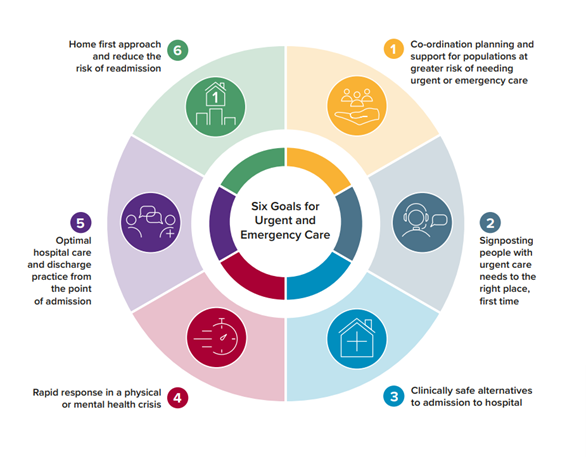
The policy outlines six integrated goals designed to achieve the best possible clinical outcomes, value and experience for both patients and staff throughout the urgent and emergency care pathway. These goals reflect priorities to provide effective, high-quality and sustainable healthcare, ideally delivered as close to home as possible. Additionally, the policy shifts focus from service-specific improvements to a population-based healthcare approach, specifically targeting health inequalities and ensuring equity of access. A core priority is the better co-ordination and planning of care for frail and older people who are at the highest risk of needing urgent care, supported by risk stratification and population health management.
The policy also commits to understanding the unique access barriers faced by various groups, including people from Black, Asian and Minority Ethnic heritages, those with intellectual disabilities, homeless people and people with mental ill health, promising tailored communication and barrier reduction. To support the achievement of the six goals, the strategy includes an additional recurrent £25 million funding and establishes four national enabling workstreams focused on digital change, behaviour change, workforce development and measurement for improvement.
What are the six goals for urgent and emergency care?
What supporting frameworks are in place?
The Six Goals for Urgent and Emergency Care National Programme is supported by several interlinked plans and service models:
Conclusion
In conclusion, the urgent and emergency care system in Wales is a comprehensive and integrated network of services designed to match the severity of the patient's need with the most appropriate service. The strategic direction of emergency and urgent care services is clearly defined by the Six Goals for Urgent and Emergency Care policy, which commits to supporting high-risk populations, expanding clinical alternatives to hospital admission (like SDEC) and improving patient flow. By continually strengthening these community-based alternatives and aligning the efforts of the Welsh Ambulance Service and acute hospital departments, NHS Wales aims to deliver a more efficient, equitable, and sustainable system that improves clinical outcomes across the country.


